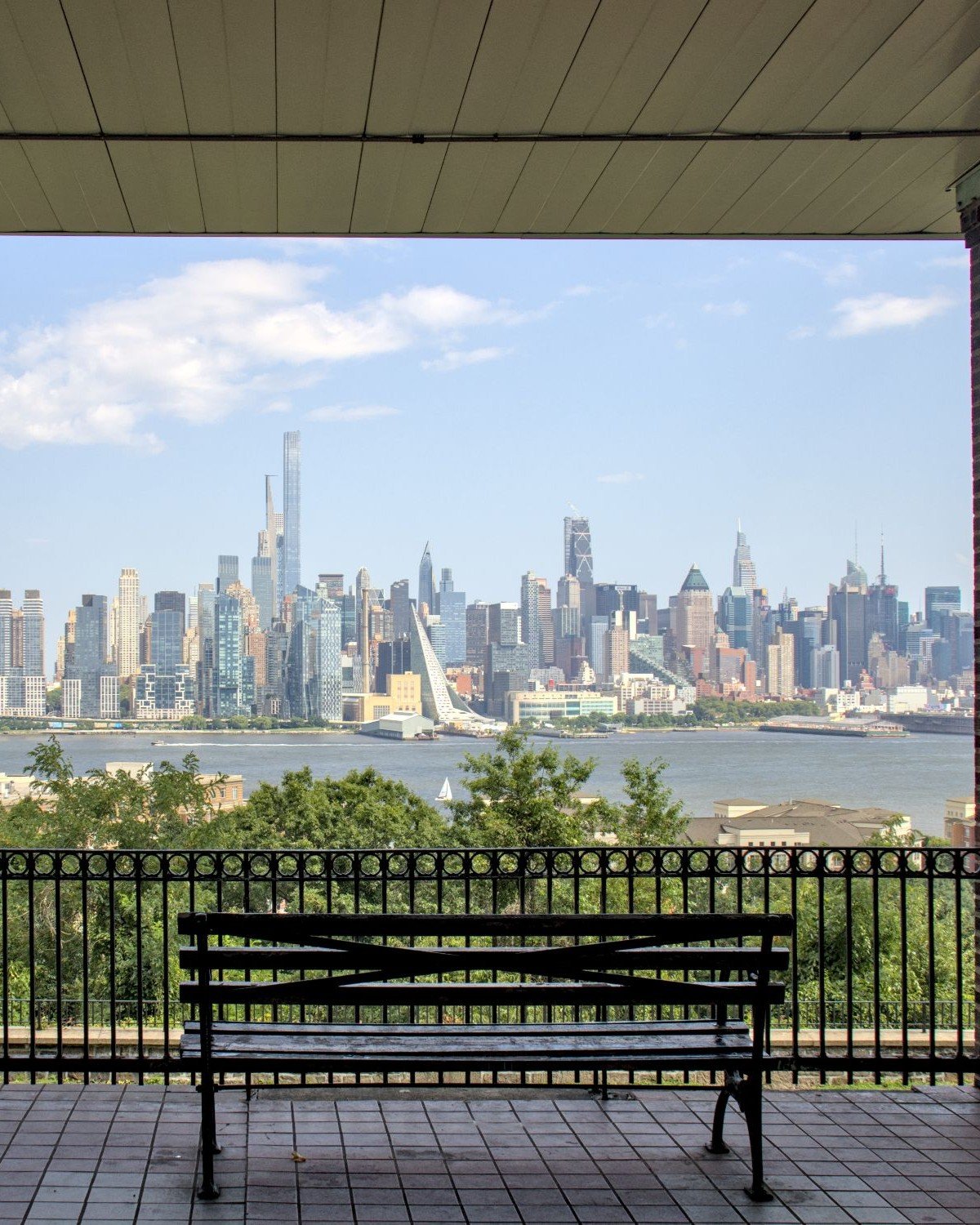
You do not have to chase a single lookout to understand why The Heights feels special. In this part of Jersey City, the views are woven into everyday life because the neighborhood sits on top of the Palisades at a much higher elevation than the downtown area to the east. If you are exploring where to buy, rent, or invest, that difference matters because it shapes how the streets feel, how parks open up, and how one block can live differently from the next. Let’s dive in.
Why elevation changes the experience
The Heights stands out because its scenery is not limited to one waterfront edge. City visual-impact materials describe the neighborhood as being on top of the Palisades, with a significantly higher elevation than the site below to the east. That ridge-top setting helps explain why views here feel built into daily routines instead of saved for special occasions.
For you, that can mean the neighborhood experience is about more than a photo moment. It is the walk to a park, the turn onto a side street, or the feeling of openness that comes from the topography itself. In real estate terms, that kind of setting often makes block-by-block context especially important.
Riverview-Fisk Park anchors the view story
Riverview-Fisk Park is the clearest place to start. Located at 498 Palisade Avenue, it is one of the neighborhood’s most recognized public overlooks and is widely associated with skyline and river views, along with views toward the Verrazzano and George Washington bridges.
What makes Riverview-Fisk Park more than a scenic stop is how it functions in neighborhood life. It is also tied to local programming like the Riverview Farmers Market and the Riverview Jazz Festival. That mix of open views and regular activity helps explain why the park feels like part of the neighborhood’s rhythm, not just a destination.
Parks add depth beyond the skyline
The Heights is not only about one famous overlook. Its park system gives the neighborhood a broader identity that blends history, recreation, and green space with elevated views.
Reservoir 3 brings history and landscape
Reservoir 3 adds a different kind of atmosphere. The city describes it as a 14-acre site dating to the 1870s, and it is listed on the State and National Registers of Historic Places. The city has also announced its reopening after construction, reinforcing its role as a meaningful public landscape in the neighborhood.
If you are thinking about lifestyle, this matters because scenery is not just about what you see in the distance. It is also about how a place feels when it gives you room, trees, and a sense of history. Reservoir 3 broadens the picture of The Heights beyond pure skyline appeal.
Leonard Gordon Park offers sweeping outlooks
In the Western Slope section of The Heights, Leonard Gordon Park adds another layer. This 5.7-acre park is known for sweeping views and for its Buffalo-and-Bear sculptures. It gives the neighborhood another public space where elevation and open sightlines shape the experience.
For a buyer or investor, parks like this help show that the visual appeal of The Heights is spread out. It is not concentrated in one corridor, which makes local knowledge especially useful when comparing different pockets of the neighborhood.
Pershing Field connects recreation and character
Pershing Field also helps define the area’s landscape. It is marked by the reconstructed stone arch that remains from the old Fourth Regiment Armory. That detail adds texture and identity to the neighborhood’s open spaces.
Taken together, Riverview-Fisk Park, Reservoir 3, Leonard Gordon Park, and Pershing Field show how The Heights combines outlooks with usable public space. That combination is often what makes a neighborhood feel livable over time.
Smaller parks make the area usable
Large parks get the attention, but smaller spaces help shape daily life. The Ward D survey identifies Terrace Avenue Park as a pocket park with tennis courts, established around 1960 on vacant land in the Western Slope.
That may sound like a small detail, but it says something important about The Heights. The neighborhood’s green spaces are not only scenic. They are also practical, local, and woven into residential areas in a way that supports everyday use.
Streets give The Heights its texture
A neighborhood can have great views and still feel flat if the streetscape lacks character. In The Heights, the streets themselves carry much of the appeal.
Central Avenue feels like a true main street
The Ward D survey describes Central Avenue as Ward D’s main street. It is lined mostly with commercial or mixed-use buildings dating from roughly 1870 to 1940, typically two to four stories tall and built flush to the sidewalk.
For you, that translates into a more grounded neighborhood feel. The views may draw attention, but the day-to-day experience is also shaped by walkable storefront corridors, older building stock, and a strong street wall that gives the area visual consistency.
Sherman Place shows architectural variety
Sherman Place and nearby Summit Avenue sit within a residential historic district study area. The survey notes Queen Anne dwellings there, along with Italianate, Craftsman, Gothic Revival, Second Empire, Colonial Revival, and Spanish Colonial Revival examples.
That kind of architectural range adds depth to the neighborhood story. If you are comparing housing options, the visual identity of The Heights is not one-note. It has different block personalities, which can matter just as much as square footage or finish level.
Washington Village adds historic density
Washington Village, centered along Palisade Avenue and Ogden Avenue, is described in the survey as one of Ward D’s densest concentrations of late-19th-century residential and mixed-use buildings. That helps explain why parts of The Heights feel layered and established.
For buyers and sellers, this is where hyperlocal guidance becomes valuable. A home’s setting here is shaped by more than the property itself. The surrounding building pattern, street rhythm, and visual continuity all influence how a block is perceived.
Holland Street rewards the walk
Holland Street is the only remaining stone-paved street in The Heights, and it is a local landmark because of its Belgian block paving. It is a reminder that the neighborhood’s appeal is not only found at the overlook. It is also found underfoot.
That detail matters because The Heights is often experienced on the move. When a neighborhood offers both destination views and memorable in-between moments, it tends to leave a stronger impression.
What buyers should notice block by block
One of the most important takeaways about The Heights is that view exposure can vary meaningfully from one address to another. The ridge-top setting, layered parks, and older street network create a neighborhood where skyline breadth, street texture, privacy, and access to open space may shift block by block.
If you are in the early stages of your search, this is where a broad online search can fall short. Two homes that seem close on a map may offer a very different feel in person. In a neighborhood like The Heights, context is part of the value.
Why walkability also matters here
Jersey City has also advanced pedestrian safety projects in the Heights. According to the city’s Vision Zero page, these include curb extensions near Riverview Park and Washington Park, along with no-turn-on-red restrictions at 15 priority intersections.
That is useful context because some of the neighborhood spaces people value most are also receiving active safety attention. If you care about how a place functions day to day, improvements like these help support the walkable character that already draws people to the area.
What this means for buying or selling
If you are buying in The Heights, it helps to think beyond the headline feature of “great views.” The real story is how elevation, parks, and historic streetscapes work together. A home here may appeal because of a skyline angle, but also because of its relationship to a main corridor, a pocket park, or a historic block.
If you are selling, that same neighborhood nuance can shape how your property should be presented. In The Heights, the story is often not just about the unit or house itself. It is also about the setting around it, and how that setting creates a lifestyle buyers can actually picture.
When you understand The Heights at the block level, the neighborhood starts to make more sense. If you want a more strategic read on where views, streetscape, and property positioning come together in Jersey City, schedule a private consultation with Hauss & Dwell Real Estate.
FAQs
What makes The Heights in Jersey City known for its views?
- The Heights sits on top of the Palisades at a significantly higher elevation than downtown to the east, which helps make views part of everyday neighborhood life.
What is the best-known park for views in The Heights?
- Riverview-Fisk Park is the neighborhood’s best-known public overlook, with skyline and river views and sightlines toward the Verrazzano and George Washington bridges.
What parks besides Riverview-Fisk Park matter in The Heights?
- Reservoir 3, Leonard Gordon Park, Pershing Field, and smaller spaces like Terrace Avenue Park all help shape the neighborhood’s mix of scenery, recreation, and daily usability.
What streets give The Heights its character?
- Central Avenue, Sherman Place, Summit Avenue, Palisade Avenue, Ogden Avenue, and Holland Street all contribute to the neighborhood’s visual identity and historic texture.
Why should buyers look at The Heights block by block?
- Because the neighborhood’s ridge-top setting, parks, and older streetscapes can create meaningful differences in views, privacy, access, and overall feel from one address to the next.