Thinking about using a two-family in The Heights to lower your housing cost? It can be a smart move, but in this part of Jersey City, the numbers rarely work by accident. You need to look past the listing photos and ask whether the rent, layout, legal status, and carrying costs truly support the plan. If you want to evaluate a Heights house hack with more confidence, this guide will show you what matters most. Let’s dive in.
Start With The Heights Math
A two-family in The Heights is usually not a cheap entry point. Realtor.com’s May 2026 market page shows a median listing price of $830,000 and median rent of $2,750 per month in the neighborhood. Redfin’s May 2026 data shows a median sale price of $884,702 and a 98.3% sale-to-list ratio.
That combination tells you something important. You are looking at a relatively expensive market where rental demand can help offset ownership costs, but not erase them. In other words, the goal is often to reduce your monthly burden through rental income, not to find a bargain-priced duplex that pays for itself on day one.
Focus On Income Offset, Not Just Price
The best Heights house hacks tend to be primary residences with a strong second unit. That second unit should create meaningful monthly income while still leaving you with a property you would actually want to live in. A low purchase price matters, but a workable rent roll and realistic expense picture matter more.
For rent context, HUD’s FY2026 Jersey City HMFA Fair Market Rents are $2,458 for a 1-bedroom, $2,763 for a 2-bedroom, $3,367 for a 3-bedroom, and $3,955 for a 4-bedroom. These are gross rent estimates that include shelter and most tenant-paid utilities, so they can serve as a conservative benchmark rather than a perfect pricing tool for every unit.
Verify The Two-Family Use Is Legal
Before you get excited about cabinets, ceiling height, or backyard space, confirm the property is legally functioning as a two-family. Jersey City’s zoning office directs buyers and property owners to use the city’s zoning tools or request a Zoning Determination Letter when an official interpretation of permitted use or nonconforming status is needed.
This step matters because a house hack becomes much riskier if the value depends on an assumed legal use that is not clearly documented. If the building only works for you because it might be reconfigured later, or because someone says it has “always been used that way,” you need more than verbal reassurance.
Understand Permits Before Renovating
If you plan to update kitchens, baths, layout, systems, or unit separation, Jersey City says a Zoning Review Application is the first step for rehabilitation and other work that requires a building permit. That means even a seemingly simple improvement plan can carry timing and approval implications.
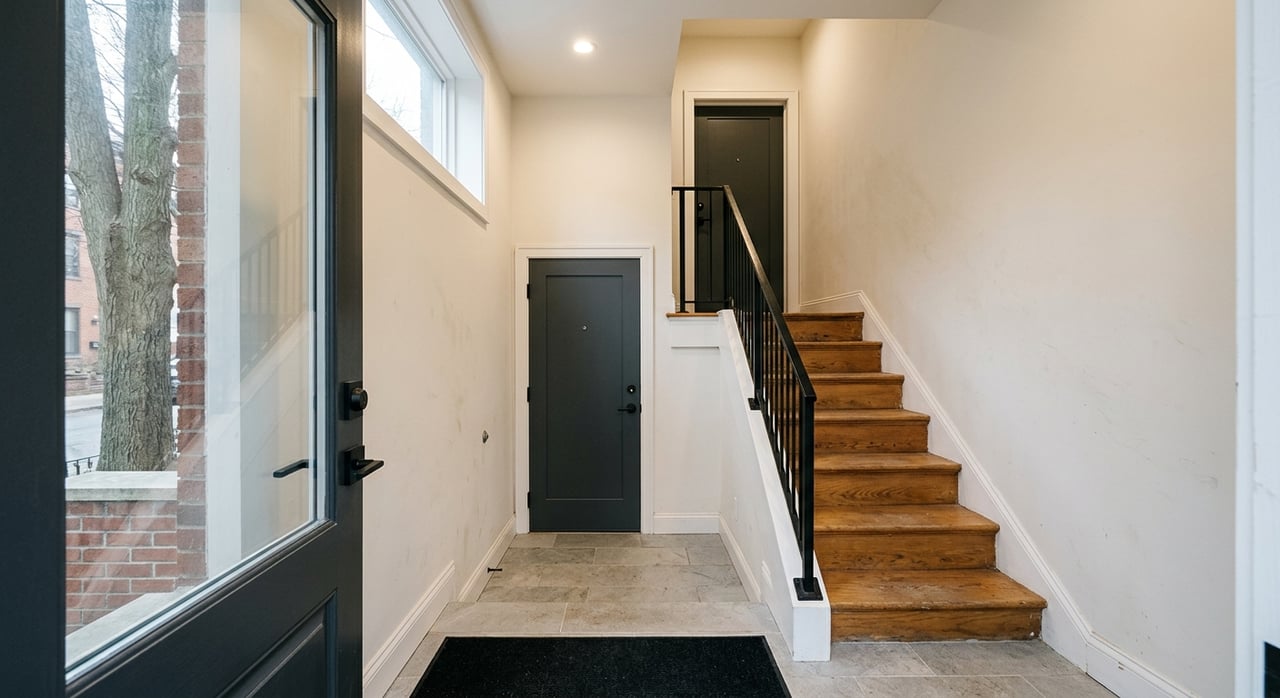
A practical rule is to favor properties that already function like two separate homes. Separate entrances, clear unit boundaries, and usable kitchens and baths can make a major difference. The less your deal depends on speculative reconfiguration, the more durable your underwriting usually is.
Screen Parking Early
Parking can quietly make or break livability in The Heights, especially if you plan to own a car. Jersey City says no new front-yard parking was approved after 2000. The city also notes that before 2000, front-yard parking for one- and two-dwelling buildings was allowed only if there were at least 18 feet between the building and the front property line.
The city also says all residential R zones permit a maximum 10-foot curb cut. For you, that means any claimed parking setup should be looked at carefully. Do not assume a paved front yard automatically equals legal, durable parking value.
Underwrite Rent Conservatively
A house hack works best when the projected rent is realistic, not aspirational. The Heights median rent of $2,750 per month and HUD rent benchmarks suggest that a solid rental unit can materially improve your monthly numbers. Still, rent should be based on the actual unit size, condition, utility setup, and layout, not just neighborhood optimism.
You also want to think through turnover risk. If your tenant moves out, can you comfortably carry the home for a period of time? A strong deal is one that still feels manageable even when life gets less predictable.
Know How Financing May Treat The Property
Freddie Mac says 2- to 4-unit owner-occupied primary residences are eligible mortgage collateral and that rental income from the other units can be added to a borrower’s income for debt-to-income purposes. Fannie Mae also allows lenders to document subject-property rent through the appraisal or, when applicable, lease documentation for two- to four-unit properties.
That can make a two-family more achievable than many first-time buyers assume. Still, lender treatment depends on documentation and the specifics of the property. The cleaner the unit setup and rent support, the easier the financing conversation tends to be.
Build A Fully Loaded Monthly Budget
This is where many buyers get too optimistic. Your monthly model should include far more than principal and interest. In Jersey City, the right budget for a two-family should also account for:
- Property taxes
- Insurance
- Vacancy risk
- Repairs and maintenance
- Lead compliance costs
- Fire-safety compliance costs
- Permit and renovation costs
- Utility exposure, if the owner pays any share
Property taxes are especially important here. Jersey City says property tax is calculated from assessed value divided by 100 and multiplied by the tax rate, and taxes are due on February 1, May 1, August 1, and November 1.
Review Insurance Requirements Closely
Insurance is not just a box to check. Jersey City says owners of a multifamily home with four or fewer units, where one unit is owner-occupied, must carry at least $300,000 of liability insurance. The city also says proof of insurance is required with the annual landlord registration statement.
For a house hacker, that means your insurance budget should reflect the building’s mixed personal and landlord role. It is smart to confirm the coverage structure early, especially if the property has older systems or any other risk factors that could affect premiums.
Check Lead And Fire Compliance
In older housing stock, compliance can affect both cost and timing. Jersey City’s Division of Housing Preservation says lead-based paint inspections are required for pre-1978 rental dwellings upon tenant turnover or within required state timelines, and then every three years or upon turnover, whichever is earlier. The city also says valid lead-safe certificates are required and are valid for two years.
Jersey City also requires a certificate of smoke alarm, carbon monoxide alarm, and portable fire extinguisher compliance before a one-family, two-family, or attached single-family structure is sold, leased, or otherwise becomes subject to a change of occupancy. That may sound administrative, but it can directly affect closing and move-in timing.
Don’t Assume Flood Risk By Reputation
Flood exposure should be checked property by property. Jersey City’s code addresses flood damage prevention, and FEMA’s Flood Map Service Center is the official source for flood hazard information. In practice, that means you should not rely on broad neighborhood assumptions when estimating insurance needs or future risk.
This is especially important when you are already balancing a high acquisition price. A parcel-specific flood issue can change your monthly carrying cost more than many buyers expect.
Be Careful With Short-Term Rental Assumptions
If your numbers only work because you hope to use short-term rental income later, that is a fragile plan. Jersey City’s Housing Preservation division enforces the short-term rental ordinance, and the zoning office says an STR-specific zoning application is required for initial STR permits.
A more stable evaluation method is to underwrite the property as a conventional long-term rental. If the deal makes sense on that basis, you are starting from firmer ground.
Think About Long-Term Flexibility
One reason buyers like two-families is optionality. You can live in one unit now, collect rent from the other, and potentially convert the property into a full rental asset later if your plans change. Jersey City says 1- to 4-unit properties are exempt from rent control, which is an important part of that long-term flexibility.
That does not remove your obligations around leases, safety, habitability, or lead rules. It does mean the city’s rent-control framework for larger buildings is not the main issue when you evaluate future rent growth for a two-family.
A Simple Heights Evaluation Checklist
When you review a two-family in The Heights, try to answer these questions before you make an offer:
- Is the two-family use legal and documented?
- Does the layout already work as two separate homes?
- Is the projected rent supported by today’s market reality?
- Have you included taxes, insurance, vacancy, maintenance, and compliance costs?
- Is there a legitimate parking solution, if parking matters to you?
- Could the property still work if one unit sits vacant for a period?
- Will your plan require permits, zoning review, or historic review?
- Have you checked parcel-level flood exposure?
The strongest house hacks usually look boring on paper in the best possible way. They do not rely on heroic rent assumptions, questionable legality, or complicated future approvals. They work because the property already makes sense as a home with stable supplemental income.
If you are weighing a two-family purchase in The Heights, a local, finance-minded review can save you from expensive assumptions. The team at Hauss & Dwell Real Estate can help you pressure-test the numbers, the property setup, and the block-by-block context before you move forward.
FAQs
What makes a two-family in The Heights a good house hack?
- A strong candidate usually has legal two-family use, a practical layout, realistic rent potential, and carrying costs that still feel manageable if the rental unit is temporarily vacant.
How much rent can a Heights two-family unit realistically bring in?
- Current benchmarks show The Heights median rent at $2,750 per month, and HUD FY2026 fair market rents list $2,763 for a 2-bedroom and $3,367 for a 3-bedroom, but actual rent depends on the unit’s size, condition, and utility setup.
Are two-family homes in Jersey City subject to rent control?
- Jersey City says 1- to 4-unit properties are exempt from rent control, though owners still need to follow lease, safety, habitability, and lead-related rules.
What legal checks matter before buying a two-family in The Heights?
- You should confirm legal use through zoning and occupancy records, review whether planned renovations need a Zoning Review Application, and verify any claimed parking setup or nonconforming condition.
What extra costs should buyers include when underwriting a Heights house hack?
- In addition to mortgage costs, you should budget for property taxes, insurance, vacancy, repairs, maintenance, lead compliance, fire-safety compliance, and any permit or renovation work.
Do owner-occupants need special insurance for a Jersey City two-family?
- Jersey City says owners of multifamily homes with four or fewer units, where one unit is owner-occupied, must carry at least $300,000 of liability insurance and provide proof with the annual landlord registration statement.